Monday, September 21, 2009

UNESCO Director General Election

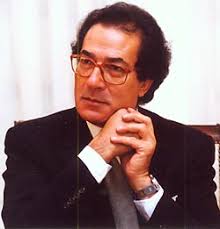
Farouk Hosny, candidate for director generalship of UNESCOUNESCO, the United Nations Education, Scientific and Culture Organization, is electing a new director general. According to the mission statement listed on UNESCO's website, its purpose is "to build peace in the minds of men" through creating "the conditions for genuine dialogue based upon respect for shared values and the dignity of each civilization and culture."

Since the vacancy was announced, the front-runner has been Egypt's Culture Minister of 22 years, Farouk Hosny. Over the years, Hosny has become known in the United States primarily through a series of outrageous claims about Israel and "the" Jews. Each of his outbursts has taken on a new weight given that he is the favored candidate for such a powerful position in an organization whose stated purpose is to ensure respect for the values and dignity of each culture.

A Jerusalem Post editorial critical of Hosny's candidacy reviews several of his most offensive statements. For instance, in May 2008 Hosny declared his readiness to burn every Israeli book in Egyptian libraries. He has since claimed that this statement was taken out of context and that he meant only those Israeli books that were critical of Egypt and Islam; however, the statement speaks for itself.

The Post editorial lists several other incidents:
Most recently Hosny accused America's UNESCO Ambassador, David Killion, of antagonism because "Killion is Jewish." (To the best of our knowledge, incidentally, he isn't.) Hosny has previously painted Israel as "inhuman," and "an aggressive, racist, and arrogant culture, based on robbing other people's rights and the denial of such rights." He has declared that Israel is "aided" in its dark machinations by "the infiltration of Jews into the international media" and by "their ability to spread lies."
Should not this evidence of anti-Israel and antisemitic bias disqualify him from controlling a UN body whose purpose includes the preservation and respect of each civilization?

UPDATE: Irina Bokova, a Bulgarian career diplomat won the election Tuesday in the fifth round of voting beating Hosny 31 votes to 27. She becomes the first woman to lead UNESCO. AP has the story.

Thursday, September 10, 2009

Excellent Short History of the Holocaust and Denial

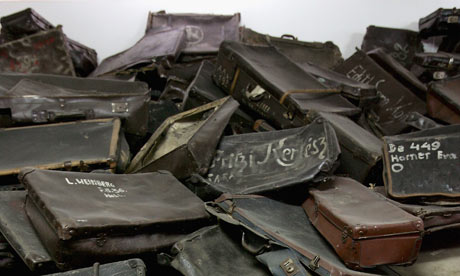
In "The Holocaust is humanity's greatest failure," (Guardian UK. 9/9/09), Dr. Deborah Lipstadt gives an excellent overview of the history of the Holocaust.

Writing in commemoration of the 70th anniversary of the beginning of World War II, Dr. Lipstadt covers the history beginning with the Nazi rise to power and ending with the perverted worldview of the Holocaust deniers.

Monday, August 31, 2009

"Distorting the Holocaust: Why Numbers Matter"

In this article Dr. Alex Grobman refocuses interest in the Holocaust and World War II away from fantasy and fuzzy thinking and toward what he calls "objective truth."

He argues that although the oft-cited number of six million Jews killed is more an average of the most credible numbers than an exact figure, the difference between saying 6 million people were killed and saying 11 million (or 50 million) were killed during the Holocaust reveals a crucial distinction. When historians speak about the Holocaust they refer to "
the systematic bureaucratically administered destruction by the Nazis and their collaborators of six million Jews during the Second World War."

On the other hand, references to the 11 million dead "
equate the destruction of the Jews of Europe with that of the others who were murdered." Yet, no other group, Grobman insists was targeted "for complete destruction." It is true that the Roma and Sinti were targeted for "asocial" behavior but the Nazis never marked them for complete annihilation. The Nazis did kill millions of others including Russian prisoners of war, the physically and mentally disabled, Polish intellectuals and clergy, etc.

However, Grobman insists that history must create distinctions and maintain separations between contemporaneous events in order to understand complex events. He summarizes his argument by saying "When we use 11 million or any other number than the Six Million to describe the Shoah, we are distorting the historical record. We trivialize the importance of this unprecedented event in modern history, minimize the experiences of all those who suffered and prevent a legitimate understanding of its causes and its universal implications for Western society."

Interestingly, in the comments to his book Denying History on Amazon one finds references to "
The Official Version of Holocaust [sic]" and "The Holocaust legend." These denier euphemisms speak to the resistance to history that does not prevail but does persist. Or perhaps they resist the voice of the victims, the voice of suffering, the unfathomable loss.

Thursday, August 20, 2009

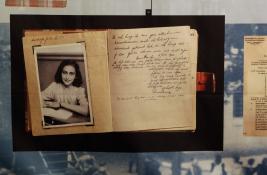
Deborah Lipstadt, Carol Ann Lee and Francine Prose discuss Anne Frank


In this call-in radio program, "The importance of Anne Frank," Carol Ann Lee and Francine Prose discuss the continued relevance of Anne Frank's life and diary. Amidst a great deal of interesting discussion, one caller relates the experience of discovering his own mother was a Holocaust "revisionist."

Dr. Lipstadt also addresses and debunks denier claims about the diary.

Tuesday, August 18, 2009

"Health care debate turns vile with Nazi analogy"

Dr. Arthur Caplan, Emanuel and Robert Hart Professor of Bioethics at University of Pennsylvania, discusses the recent comparison of President Obama's health care reform policies to Nazi medicine by its critics. He argues convincingly that this analogy amounts to a form of Holocaust denial.